menu
menu
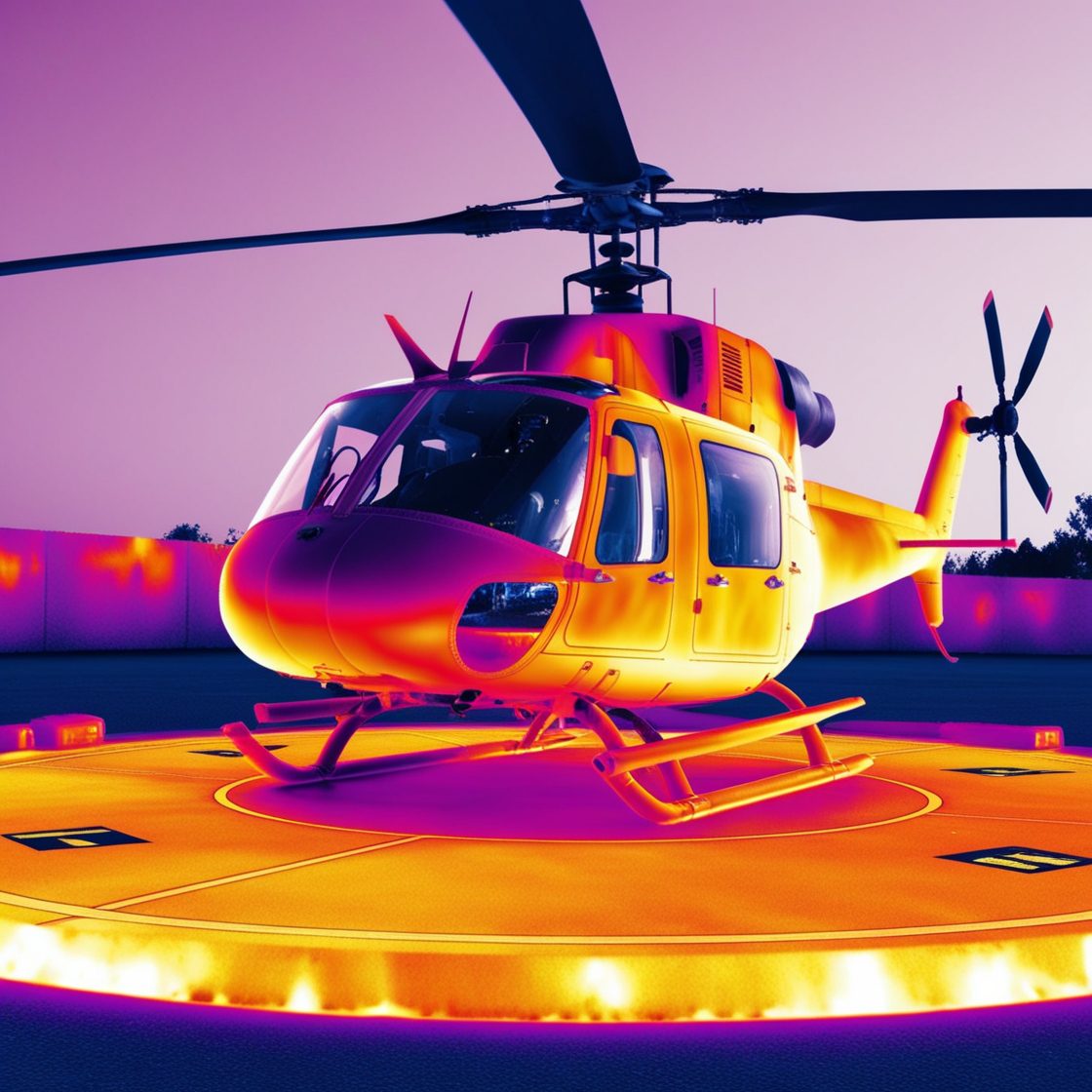
Location: Uttoxeter, Staffordshire
Project/Case: Helipad Heating Project
Year: 2024
Uttoxeter helipad heating was required to upgrade a landing pad in Staffordshire. The existing helipad measured 20 metres in diameter. It needed reliable protection against snow and ice throughout the year.
Winter conditions created two important safety risks. Snow could cover the pad markings and reduce their visibility for pilots. Ice could also make landing operations less safe.
The client required a cost-effective and robust heating solution. However, the system had to follow the helipad’s existing surface design. Contraction joints divided the landing surface into separate quadrants.
Heating cables could not cross these contraction joints. Therefore, each quadrant needed an individual cable layout. The design also had to maintain consistent heat distribution across the complete landing area.
The project required a system that could respond automatically to changing weather conditions. In addition, the client wanted the option to override the controls manually when necessary.
Heatcom engineered the system through Heat Mat in the UK. The result was a bespoke cable-based snow and ice melting solution designed around the helipad.
Heatcom specified custom heating cables with extended supply leads. The longer leads simplified connections between the heated areas and the power supply. They also supported the separate layout required for each quadrant.
The cable design followed the contraction joints across the surface. Consequently, installers could heat each quadrant without routing cables across the joints. This protected the cable layout while respecting the pad’s construction.
Installers secured the heating cables to reinforcement mesh. They used precise cable spacing to achieve the required heat output. This layout also supported consistent heat distribution across each separately heated section.
A fully automated control system managed the snow and ice melting. Heatcom also included a manual override option for additional operational control.
Combined temperature and moisture sensors were embedded directly within the pad surface. These sensors monitored whether conditions presented a frost or snow risk. The system activated only when both the surface conditions and temperature required heating.
Once the surface conditions cleared, the controls switched the heating off again. Therefore, the system avoided operating continuously during dry or safe conditions. This dual-sensor automation supported efficient energy use.
The installation took place in 2024. Its bespoke layout combined custom cables, extended supply leads, reinforcement mesh and automatic surface sensors.
The Uttoxeter helipad heating system now keeps the landing area operational during severe winter conditions. Snow and ice no longer obscure the pad markings when the system is operating.
Clear markings support pilot visibility during landing operations. Meanwhile, the heated surface provides safer conditions for aircraft using the pad. The system therefore supports year-round access to the helipad.
Automatic monitoring removes the need for continuous manual operation. The combined sensors activate heating only when frost or snow presents a risk. As a result, the system balances winter safety with efficient operation.
The completed project delivered a tailored solution for a complex surface design. Each quadrant receives heating without cables crossing the contraction joints. This approach provides consistent coverage while protecting the integrity of the installation.
The project demonstrates Heatcom’s ability to deliver bespoke outdoor heating for critical infrastructure. It combines reliable winter protection, automated control and a layout adapted to the existing helipad.
Helipad-Case-2.pdf
Мы также последовательно стремимся к развитию серьезных и долгосрочных отношений сотрудничества с нашими партнерами и поставщиками. Поэтому Heatcom в первую очередь сотрудничает с людьми.