menu
menu
Location: England / Southeast England
Project/Case: Vineyard frost protection
Year: 2025 - 2026
In spring 2025 Heatcom and Heat Mat installed a vineyard frost protection system at a commercial vineyard in Southeast England.
The purpose was not a sale. Instead, we wanted empirical data on how well heating cables protect vines under real conditions.
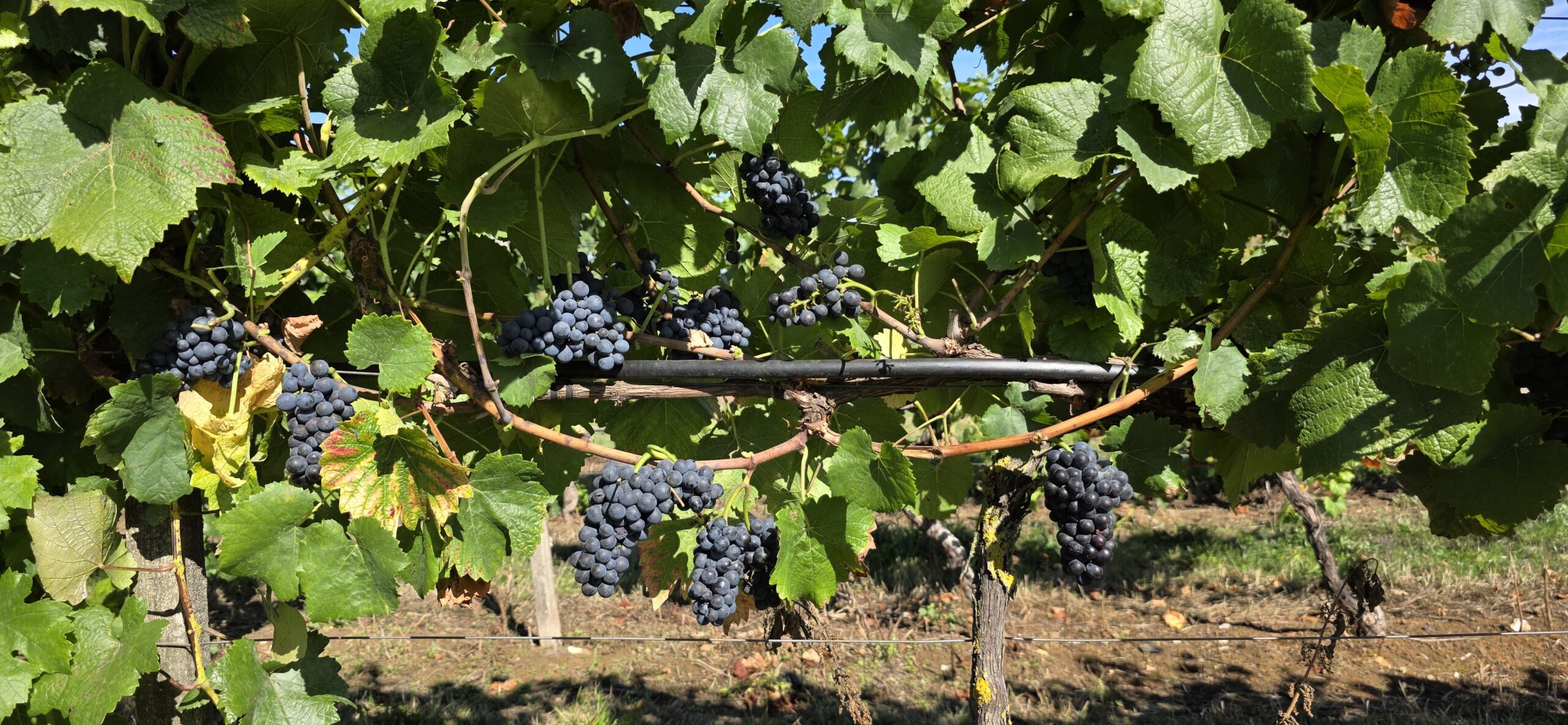
We ran heating cables along three rows of Pinot noir. Control rows on either side stayed untreated, so we could compare the two directly.
The system included:
Afterwards, the cables stayed in place through the growing season and all winter work. We did not reposition them before spring 2026, even where that would have improved performance.
That choice was deliberate. The aim was to replicate how the system behaves in normal use, rather than under ideal conditions.
Heat Mat carried out the installation, and an independent party collected all the data.
Frost hit the vineyard in both test years.
On 6 May 2025 daytime temperatures reached 16°C, then dropped to -3°C overnight. This rare double-dip event held the vines below zero for more than three hours. Unheated vines lost an average of 3.89 buds and shoots per vine, while protected vines lost only 0.66. That difference equals an 83% reduction in frost damage.
Spring 2026 proved worse. A seven hour frost on 25 April reached -4.6°C, and a five hour frost on 11 May reached -2.9°C. One vineyard manager called them the worst spring frosts in 25 years.
In the unprotected control area, bud and shoot losses reached 80% to 100%. By contrast, vines with heating cables lost between 15% and 30% across both events. By early June anyone could see the difference in vine growth from 50 metres away.
Meanwhile, two alternative frost protection systems on the same site could not cope with the frosts and delivered little benefit.
At harvest in September 2026 the pattern held:
Extrapolating across a hectare at 3,333 vines, 2.5 m row width and 1.2 m vine spacing gives a harvest of 1.05 tonnes without heating, 3.7 tonnes with the low-output cable and 6.4 tonnes with the high-output cable.
Heatcom supplies frost protection for pipes, roofs, gutters, outdoor areas and industrial installations across Europe. This project therefore extends that work into agriculture, where the same principle protects a crop rather than a building.
Vineyard-Frost-Protection.pdfOrtaklarımız ve tedarikçilerimizle ciddi ve uzun vadeli iş birlikleri geliştirmeye sürekli olarak özen gösteriyoruz.